
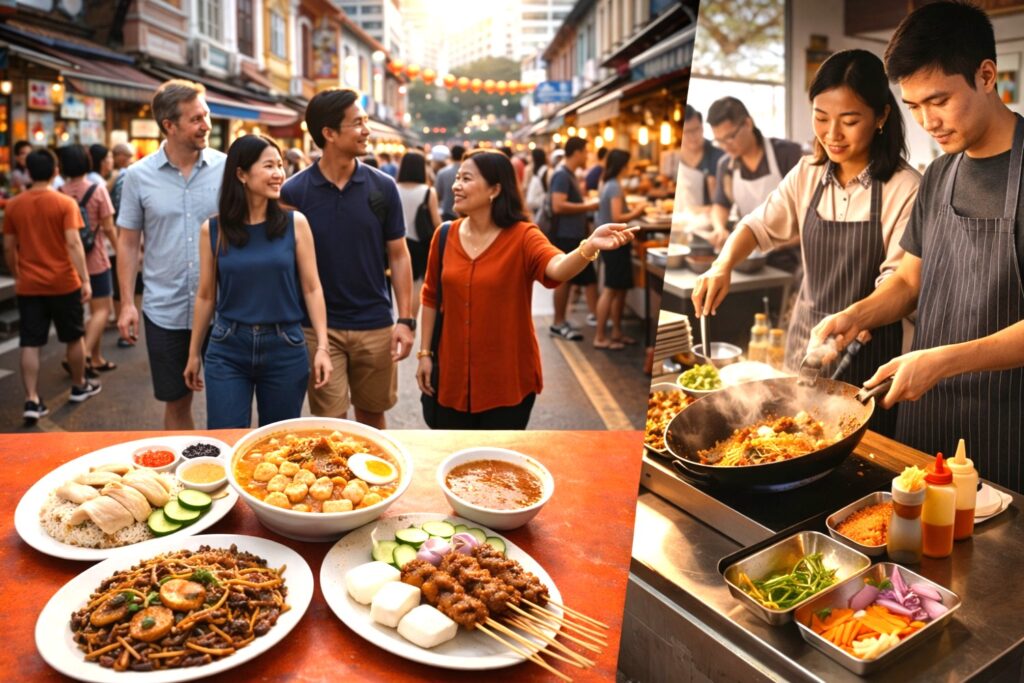
Singapore does food differently than anywhere else I’ve travelled, and I mean that as the highest compliment.
This is a city where a government-subsidised hawker stall serves better chicken rice than most Michelin-starred restaurants, where a $4 bowl of laksa can genuinely be the best thing you eat all year, and where the phrase “street food” doesn’t come with health warnings or hesitation.
What caught me off guard wasn’t just how excellent the food is (I’d read enough to expect that), but how many ways there are to experience it. You can spend a week eating independently at hawker centres for under $65 total, or book a guided food tour that decodes the entire culinary landscape in three hours.
You can take a cooking class and learn the techniques yourself, or combine food stops with a bike tour through neighbourhoods you’d never find on your own. Each approach offers something completely different, and honestly, the best Singapore food experience is whichever one matches how you actually want to travel.
Here’s what you need to know about Singapore’s food scene and how to navigate it without wasting time or money on experiences that don’t suit you.
Why Singapore is a World Food Capital (And What That Actually Means)
Singapore earned its reputation as one of the world’s great food cities not through fine dining (though it has plenty of that), but through its hawker culture. When the government moved street food vendors into centralized hawker centres in the 1960s and 70s, it created something remarkable: affordable, excellent, safe food accessible to everyone regardless of income or status.
UNESCO recognised Singapore’s hawker culture as Intangible Cultural Heritage in 2020, which sounds bureaucratic but actually matters. It means the world acknowledged what Singaporeans already knew: that these aren’t just cheap meals, they’re living culinary traditions passed down through generations, perfected over decades, and still thriving today.
What makes Singapore different from other Asian food destinations is the combination of accessibility, safety, and quality. The food is genuinely excellent. The hygiene standards are strictly enforced (every stall has a government grade displayed). The prices are absurdly low by Western standards. And you’re eating the exact same dishes as locals, not watered-down tourist versions.
The diversity is staggering. Chinese, Malay, Indian, and Peranakan (Straits Chinese) cuisines all evolved here, influenced by decades of immigration and cross-cultural cooking. You’ll find Hainanese chicken rice, Tamil fish head curry, Malay satay, and Peranakan laksa all within the same hawker centre, often at stalls that have been run by the same families for 40+ years.
Here’s what that means for travellers: You don’t need a massive food budget to eat brilliantly in Singapore. But you do need to understand the different ways to experience the food scene, because wandering into a hawker centre with no context can be overwhelming, whilst booking every available food tour is expensive overkill.
Understanding Your Options: Hawker Food vs Tours vs Cooking Classes

The first decision is whether you want to navigate Singapore’s food scene independently or with guidance. There’s no wrong answer, but there are trade-offs worth understanding before you book anything.
Hawker centres are open-air food courts where you order directly from individual stalls, find your own seating, and eat for £3-6 per meal. This is how locals eat daily. It’s cheap, authentic, and excellent if you’re comfortable figuring things out yourself or doing minimal research beforehand. The atmosphere is chaotic and communal.
You’ll sit at shared tables with strangers. No one speaks English at every stall, but pointing and nodding works fine. If you’re confident navigating unfamiliar food environments and don’t need hand-holding, hawker centres alone could be your entire Singapore food experience.
Food tours condense the learning curve. A guide takes you to multiple hawker stalls or restaurants, explains what you’re eating, provides cultural context, and handles ordering. You’ll taste 6-10 dishes in 3-4 hours, learn about ingredients and cooking techniques, and get insider tips on which stalls are worth queueing for.
The best tours feel like eating with a knowledgeable local friend rather than a scripted sales pitch. The trade-off: you’re paying $65–$100 for food that would cost $13–$20 independently. If that feels worth it for the education and efficiency, brilliant. If it doesn’t, skip it.
Street food tours specifically focus on hawker centres and market stalls rather than sit-down restaurants. These tend to be slightly cheaper ($50–$80) and more authentic than general food tours, which sometimes include stops at tourist-friendly restaurants that locals never visit. If you want guided hawker centre navigation without restaurant padding, this is the category.
Cooking classes teach you to make the dishes yourself. You’ll spend 3-4 hours learning techniques, working with ingredients like belacan (shrimp paste) and pandan leaves, and actually cooking 3-5 dishes under instructor guidance. The best classes include market tours where you learn to source ingredients.
You leave with recipes, skills, and a much deeper understanding of why certain dishes taste the way they do. The trade-off: cooking classes cost $80–$115, take half a day, and you’re not touring the city whilst you’re chopping lemongrass. If learning technique matters to you, they’re worth every pound. If you’d rather spend that time eating or exploring, they’re not.
Food and bike tours combine cycling through neighbourhoods with food stops. You’ll cover more ground than walking tours, see residential areas and markets most tourists miss, and burn off some calories between tastings (a genuine relief after a week of eating your way through Singapore).
These suit active travellers who want food context alongside neighbourhood exploration. The downside: fewer food stops than walking tours, and you’re somewhat limited to bike-friendly routes.
How to Choose Your Food Experience (Honestly)

Do a food tour if: You’re in Singapore for a short time (2-4 days), want maximum food variety without research, appreciate cultural context, or feel intimidated by hawker centres. The efficiency and education justify the cost if you’d otherwise waste time wandering aimlessly or ordering poorly.
Skip food tours if: You’re staying a week or longer, enjoy independent food hunting, have a tight budget, or generally find guided tours irritating. You’ll eat better and cheaper on your own once you get your bearings.
Do a cooking class if: You genuinely want to replicate these dishes at home, care about technique, or find hands-on learning more engaging than passive tasting. The market tours alone are worth it for food enthusiasts.
Skip cooking classes if: You’re not realistically going to cook laksa or char kway teow in your home kitchen, you’d rather spend half a day exploring the city, or you’re more interested in eating than learning culinary skills.
Do a bike tour if: You’re physically comfortable cycling, want to see residential Singapore alongside food stops, or find pure walking tours tedious. The neighbourhood perspective is genuinely valuable.
Skip bike tours if: You’re not confident cycling in traffic (even light traffic), you’d rather maximise food stops over distance covered, or you prefer slower-paced walking.
Go independent at hawker centres if: You have time to explore, don’t mind occasional confusion, want authentic local experiences, or simply can’t justify spending $75 on what amounts to guided shopping. Read the hawker centres guide first, choose 2-3 centres to visit, and order the most popular dishes at the busiest stalls. You’ll be fine.
What to Eat: The Essential Dishes
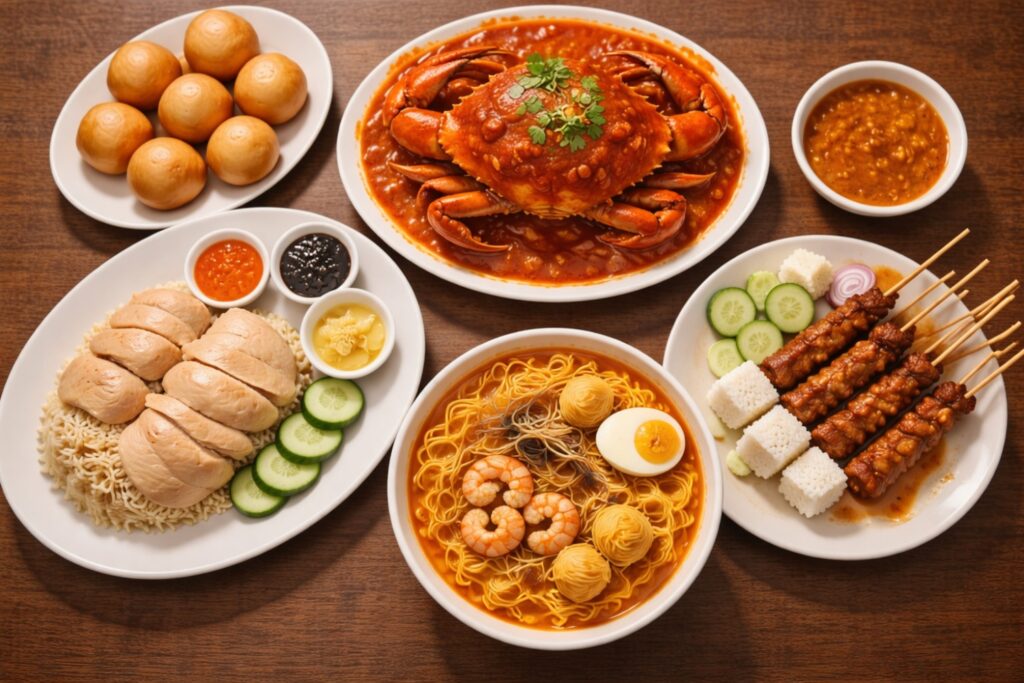
Regardless of how you experience Singapore’s food scene, certain dishes are non-negotiable. If you leave without trying these, you’ve missed the point.
Hainanese chicken rice is Singapore’s national dish, and it’s far better than it sounds. Poached chicken, fragrant rice cooked in chicken stock, chili sauce, ginger paste, and dark soy. The genius is in the simplicity. The best versions have impossibly tender chicken with perfectly seasoned rice that tastes like chicken even before you add the sauces.
It’s comfort food elevated to an art form, and every Singaporean has strong opinions about which stall does it best. Start here. If you don’t understand the appeal after one good bowl, fair enough, but most people are converts immediately.
Laksa is spicy coconut curry noodle soup with prawns, fishcake, tofu puffs, and thick rice noodles. Rich, creamy, complex, with enough chili kick to make you sweat slightly but not enough to be painful (unless you ask for extra). The Peranakan version (Katong laksa) is particularly good. Don’t skip this because you think you don’t like spicy food. Ask for less chili if needed, but try it.
Char kway teow is flat rice noodles stir-fried with egg, Chinese sausage, prawns, bean sprouts, and dark soy sauce. The best versions have wok hei, that slightly charred, smoky flavour from high-heat cooking that you can’t replicate at home. If it tastes flat and oily, you’ve ordered from the wrong stall. Find one with a queue.
Chili crab is expensive by hawker standards (£20-30 for a whole crab), messy to eat, and absolutely worth it. Sweet, spicy, savoury tomato-chili sauce, fresh crab, fried mantou buns for mopping up sauce. Order it at a seafood restaurant, not a hawker centre, and don’t wear white.
Satay (grilled skewers with peanut sauce) is simple, excellent, and available everywhere. Order at least 10 sticks because they’re small. Chicken is safe, mutton is more flavourful if you’re not fussy.
The Practical Bit: Costs, Timing, and Logistics
Hawker centre meals: £3-6 per person including a drink. Budget $25 for two people eating well with variety.
Food tours: $65–$100 per person for 3-4 hours. Book ahead, especially for popular tours.
Cooking classes: £60-90 per person for half-day classes including market tours and lunch.
Bike tours with food stops: $75–$115 per person for 3-4 hours.
When to eat: Hawker centres are busiest at lunch (12pm-2pm) and dinner (6pm-8pm). If you want to avoid crowds, go at 11am or 3pm. Some stalls sell out by 1pm, others don’t open until evening. Check before you go.
Cash vs card: Bring cash for hawker centres. Most stalls don’t accept cards, and foreign credit cards are useless. Withdraw Singapore dollars beforehand and carry small notes.
How much time to allocate: Give yourself at least 3-4 full meals at hawker centres if you’re exploring independently. One meal isn’t enough to understand the variety. Food tours take 3-4 hours. Cooking classes take half a day. Plan accordingly.
Final Thoughts: What Actually Matters
Singapore’s food scene rewards curiosity and appetite more than budget. You can eat brilliantly $13 a day or spend about $250 on a single meal, and both experiences can be genuinely excellent if they suit what you want.
The mistake I see travellers make is either skipping hawker centres entirely because they seem intimidating (they’re not), or booking so many food tours that they never experience the independence and spontaneity that makes hawker culture special. Do one tour if you want the foundation, then explore on your own. Or skip tours altogether and dive in with the hawker centres guide as your reference.
What matters most is eating the actual dishes locals eat, at the places locals go, without overthinking it. Singapore’s food scene isn’t precious or gatekept. It’s democratic, accessible, and genuinely welcoming to anyone willing to try. Order from the stalls with long lines, return your tray after eating, and don’t waste money on fusion nonsense at hawker centres when traditional versions are sitting three stalls away.
If you leave Singapore having eaten well and understood why the food matters beyond just tasting good, you’ve done it right. Everything else is just logistics.
Frequently Asked Questions
What’s the best way to experience Singapore food as a first-time visitor?
Combine one guided tour with independent hawker centre visits.
Start with a food tour or street food tour on your first or second day to get oriented, learn what to order, and understand the cultural context. Then spend the rest of your trip exploring hawker centres independently using what you learned. This gives you the foundation without spending your entire budget on guided experiences. If you only have 2-3 days total, one good tour might be enough alongside a couple of independent meals.
Are food tours in Singapore worth the cost?
Yes, if you value efficiency and education over budget.
Food tours cost $65–$100 for food that would run $13–$20 independently, so you’re paying for guidance, context, and time-saving rather than the food itself. If you’re in Singapore briefly, feel overwhelmed by options, or genuinely want to learn about the cuisine beyond just eating it, tours justify the cost. If you’re staying a week, have a tight budget, or prefer independent exploration, skip them and use that money for more meals at hawker centres. Neither choice is wrong; it depends on your travel style and priorities.
How much should I budget for food in Singapore?
£15-25 per day for excellent eating at hawker centres.
If you’re eating primarily at hawker centers, budget $6–$10 per meal including drinks. That’s $20–$33 daily for three solid meals. Add $13–$25 if you want occasional sit-down restaurants or chili crab. If you’re doing food tours or cooking classes, add $65–$115 per experience. Singapore can be expensive, but food doesn’t have to be if you eat where locals eat. Budget travelers can eat brilliantly for under $25 daily; food enthusiasts might spend $50–$80 including one nicer meal.
What’s the difference between a food tour and a street food tour?
Street food tours focus exclusively on hawker centres and market stalls.
General food tours might include sit-down restaurants, cafes, or tourist-friendly spots alongside hawker food. Street food tours stick to hawker centres, markets, and genuinely local stalls where Singaporeans actually eat. They tend to be slightly cheaper ($50–$80 vs $75–$100) and more authentic. If you want pure hawker culture without restaurant padding, book a street food tour. If you want a broader overview including some restaurant experiences, book a general food tour.
Should I take a cooking class in Singapore?
Only if you’ll actually use the skills at home.
Cooking classes cost $75–$115 and take half a day. They’re brilliant if you genuinely want to replicate laksa, chicken rice, or char kway teow in your own kitchen and care about learning technique. The market tours teach you about ingredients you’ve never seen before, and the hands-on experience deepens your understanding of the cuisine. But if you’re not realistically going to source belacan and pandan leaves back home, or if you’d rather spend that half-day exploring the city, skip the class and use the money for more meals.
Can I experience Singapore’s food scene on a tight budget?
Absolutely, hawker centres are designed for affordability.
Singapore’s hawker centres were created specifically to provide excellent, affordable food to everyone. You can eat three solid meals daily for $20–$25 total. Chicken rice costs $4–$6. Laksa runs $5–$8. Char kway teow is $5–$8. Drinks cost $1–$3. Budget travelers can eat as well as luxury travelers in Singapore if they stick to hawker centers and skip expensive restaurants. The quality-to-cost ratio at hawker centers is genuinely unmatched anywhere else I’ve traveled.
What are the must-try dishes in Singapore for first-time visitors?
Chicken rice, laksa, char kway teow, satay, and chili crab.
Hainanese chicken rice is Singapore’s national dish, simple, perfect, universally loved. Laksa (spicy coconut curry noodles) gives you complex Southeast Asian flavours.
Char kway teow (stir-fried flat noodles) showcases wok hei if done properly.
Satay (grilled skewers) is approachable and excellent.
Chili crab is expensive but iconic. Start with these five, then branch out to carrot cake (savoury radish cake), hokkien mee, rojak, and whatever else looks good at busy stalls. Don’t overthink it, order from stalls with long lines of locals and you won’t go wrong.


