Going on Eat-About: The Tastiest Street Food, Shuks and Restaurants of Tel Aviv, Israel

My sneakers hit the pavement in Tel Aviv before my bag even hits the hotel floor. That is how I travel: drop the gear, lace up, go. And in this city, going means eating. I call it going on eat-about, a mashup of eating anything that looks good without a game plan and walking the city until it gets under your skin.
Tel Aviv does not ease you in. It throws hummus, falafel, sea air and shuk noise at you from the first block, and you either keep pace or you get left behind at the pita counter.
People warned me before this trip. “The food will be the highlight,” they said. They were right, and they undersold it. The bread here is doughy in a way that makes bagged supermarket bread back home look like packing material. The hummus is a different food group entirely. I walked out of my first meal already plotting the next one.
This is not a sit-down, wait-for-the-check kind of guide. This is a moving one: coffee in hand, falafel in the other, sandals slapping the boulevard, market stalls blurring past. Here is where the israeli street food actually lives in Tel Aviv, updated with real addresses, real hours and a couple of new stops I picked up along the way.
More Israel Experiences
This route moves fast, but it’s not the only way in. Carmel Market’s best tours go deeper on one location instead of covering the whole city.
Want more formats to compare? The five best Tel Aviv food tours break down the range from fast to slow-paced. Ready to switch gears after dark?
The Tel Aviv pub crawl lineup picks up exactly where the food stops.
For the full lay of the land, the Israel food and market tours guide ties it all together.
The Tiny Iced Coffee That Runs This City
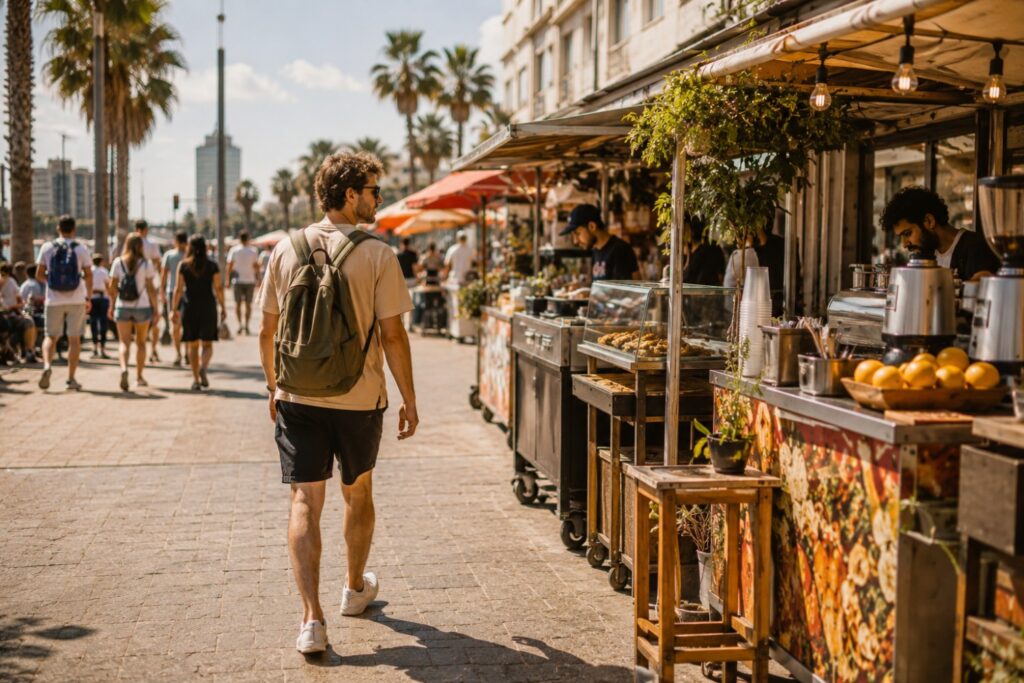
Coffee is not a drink in Tel Aviv. It is a lifestyle, a pause button, a social ritual squeezed into ninety seconds at a curbside stand. Israel is famously the one country where Starbucks could not get traction, and once you stand in line at a local stand you understand why. The city has its own rhythm and its own cup.
Look for the tiny coffee kiosks parked on the boulevards downtown, especially along Rothschild Boulevard and Ben Yehuda Street. Order the iced coffee, find a bench in the shade, and watch the city move for ten minutes. It costs less than a fancy latte back home and delivers more flavor per sip. Price wise, expect $ territory, this is a cheap daily habit, not a splurge.
These stands rotate and pop up seasonally, so there is no single address to chase. Walk the boulevards mid-morning and you will find one within a few blocks. That is the whole point: it is built into the walk, not a destination on its own.
HaKosem: The Falafel That Started It All
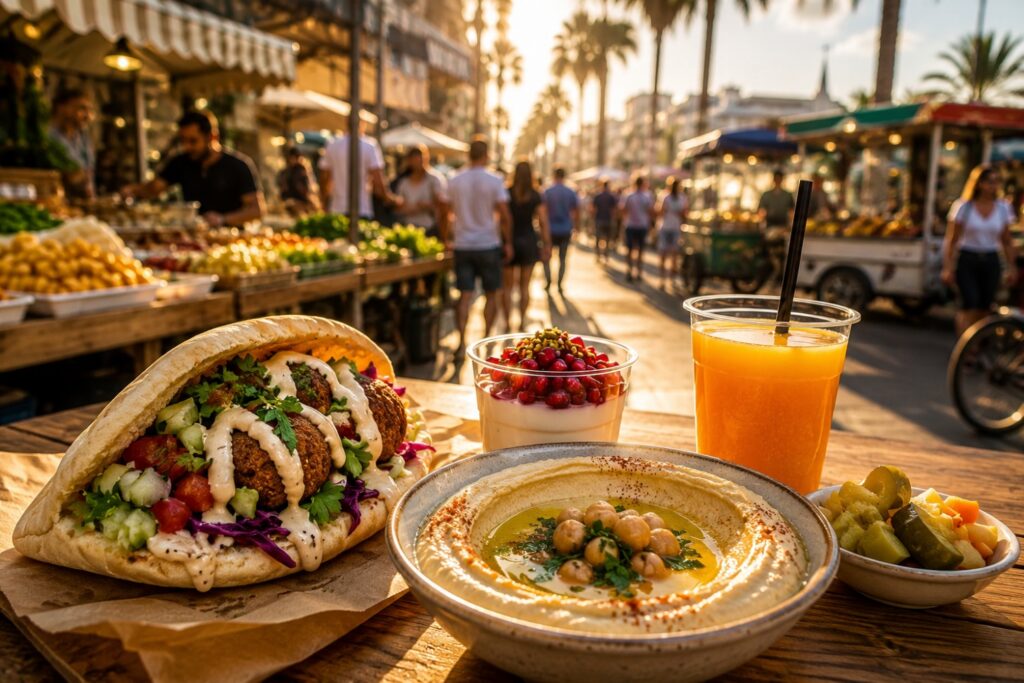
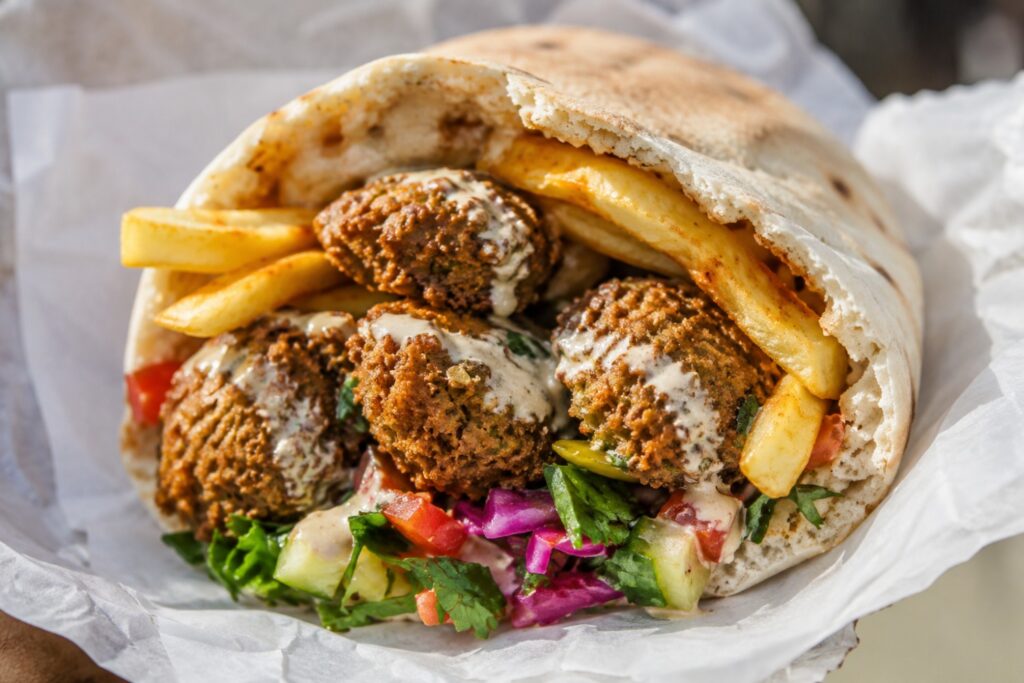
Fries do not ruin things. Fries improve things. And Israeli falafel proves the theory correctly every single time. Falafel here is not a garnish, it is the main event, crispy on the outside, green and herby inside, stuffed into pita that is somehow both chewy and light at once.
For this update, I went looking for the falafel spot locals actually queue for, and HaKosem is still it. Opened in 2001 on the corner of King George and Shlomo HaMelech streets, it has grown from a small stall into one of the most recognized names in Israeli street food, and the line at lunchtime tells you everything. Order the falafel in pita, add the fries if your stomach can handle the ambition, and grab a bench outside if the tables are full. Locals do it too.
- Address: Shlomo HaMelech Street 1, Tel Aviv (half a block from Dizengoff Center)
- Hours: Sunday through Thursday 10:00am to 10:00pm, Friday 10:00am to 3:30pm, closed Saturday
- Price range: $
- Link: HaKosem overview
My mouth is not a delicate instrument. Years of processed food back home means almost any falafel in this city tastes like a revelation to me. But even accounting for my low bar, HaKosem earns the hype. The falafel is crispy without being dry, the bread never falls apart mid-bite, and the fries genuinely make it better, not just bigger.
Hummus You Will Regret Eating (Because Nothing Else Compares Again)
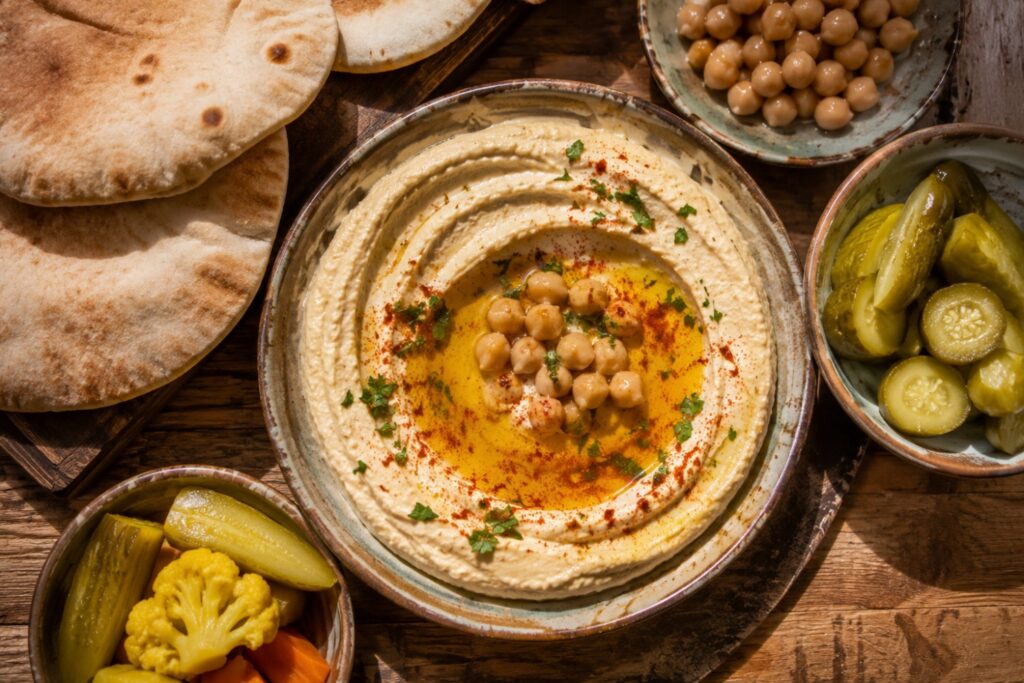
Here is a public service warning: do not eat hummus in Tel Aviv unless you are ready to lower your standards for the rest of your life. Once you have had it here, warm, creamy, spiced just right, swimming in good olive oil, the hummus back home starts to taste like flavored paste.
You do not need a specific address for this one. Follow the line. Any spot with a queue of locals at 11am on a weekday, order the plate, tear off a piece of pita and go straight in with your hands. Skip the utensils. Locals do. Price wise, a hummus plate typically runs $ to $$, and it is enough food for a full meal.
I ate hummus five times in four days and I am not embarrassed about it. This is the one food group in this article where I genuinely cannot recommend a bad option, because I did not find one.
Juice It Up: Jaffa Oranges Doing What They Do Best
Warmer climate, better fruit, that is just physics. Tel Aviv runs on fresh-squeezed juice, and the stands are everywhere: on boulevards, tucked into market corners, parked outside beach entrances. Most blend fresh Jaffa oranges, the same variety that made this region famous for citrus long before it was famous for tech.
Grab a cup, keep walking, and let it hit you between market stops. Price wise this sits firmly in $ territory, and it is the easiest win of the whole trip: zero research required, maximum payoff. If you see pomegranate or watermelon blends added seasonally, take the upgrade.
Sweet Malabi, Still the City’s Favorite Cheap Dessert
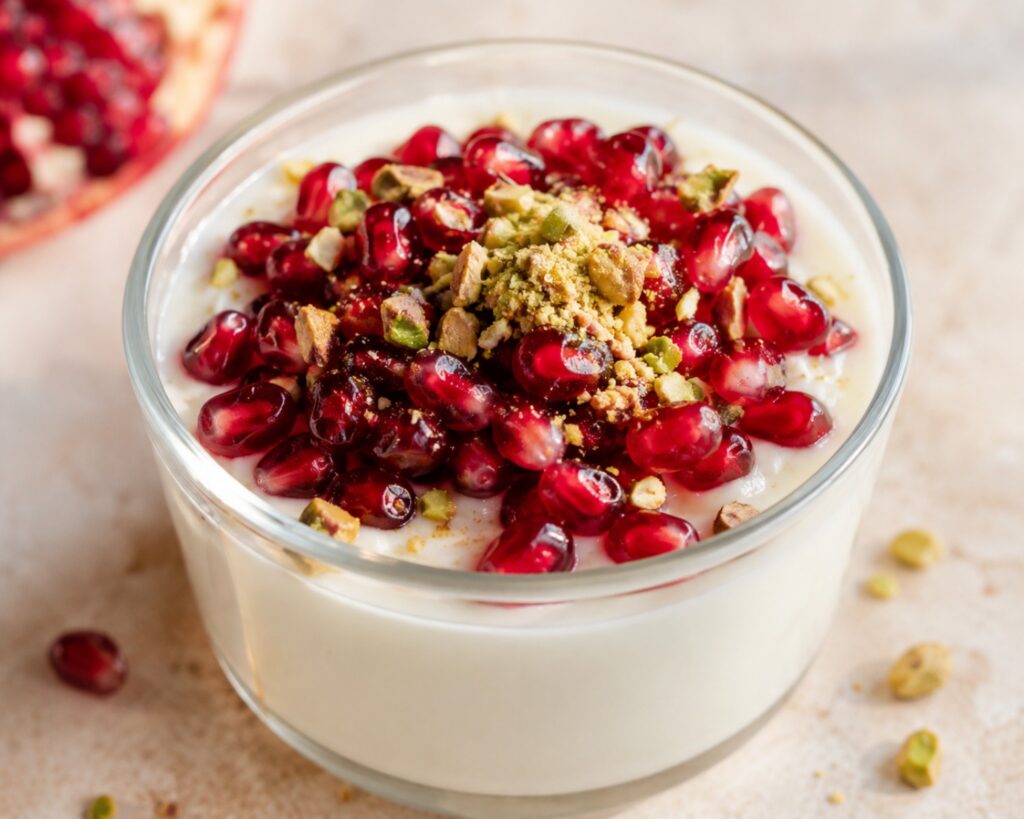
Malabi is a milk pudding perfumed with rosewater, usually crowned with pomegranate seeds, and it toes the line between street food and fine dining dessert depending on where you find it. Markets sell it in small cups for a couple of dollars, and high-end restaurants plate it up as a proper finale. Same base, different context, both versions work.
Toppings shift by vendor: some go heavy on pomegranate, others add crushed pistachio, coconut, or rose petals. Order it cold, eat it slow, and do not overthink where you get it. This is one of the few Israeli street food items where quality stays consistently high no matter which stall you pick.
Shuk HaNamal: The Tel Aviv Port Market, Updated
Time to correct the record on this one. The Tel Aviv Port Market, known locally as Shuk HaNamal, is not just a Friday thing anymore, it runs six days a week inside a covered hangar at the Tel Aviv Port, with an additional outdoor farmers market that takes over the adjacent lot every Friday morning. That outdoor Friday market is still the one to build your morning around: fresh produce, baked goods, olive oil, boutique cheese, even fresh sugar cane juice pressed on the spot.
The indoor hall stays open the rest of the week too, so if Friday does not line up with your schedule, you still get a shot at it. Young families and couples move through the stalls buying wine, cheese and produce before heading beachside with friends, which tells you everything about how locals actually use this place: shopping first, hanging out second.
- Address: Hangar 12, Tel Aviv Port, Tel Aviv
- Hours: Indoor market open daily, roughly 8:00am to 8:00pm, outdoor Friday farmers market runs approximately 8:00am to 3:00pm
- Price range: $$
- Link: Shuk HaNamal official site
Come hungry and leave room to wander. This is not the raw, chaotic energy of a traditional shuk, it is polished, modern, and built for browsing as much as buying. Grab a coffee, sample cheese, and let the port views do the rest.
New Stop: Carmel Market, the Real Chaos Engine
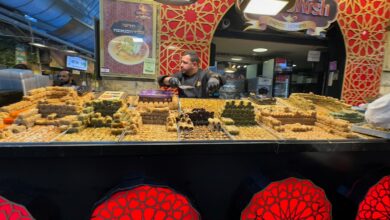
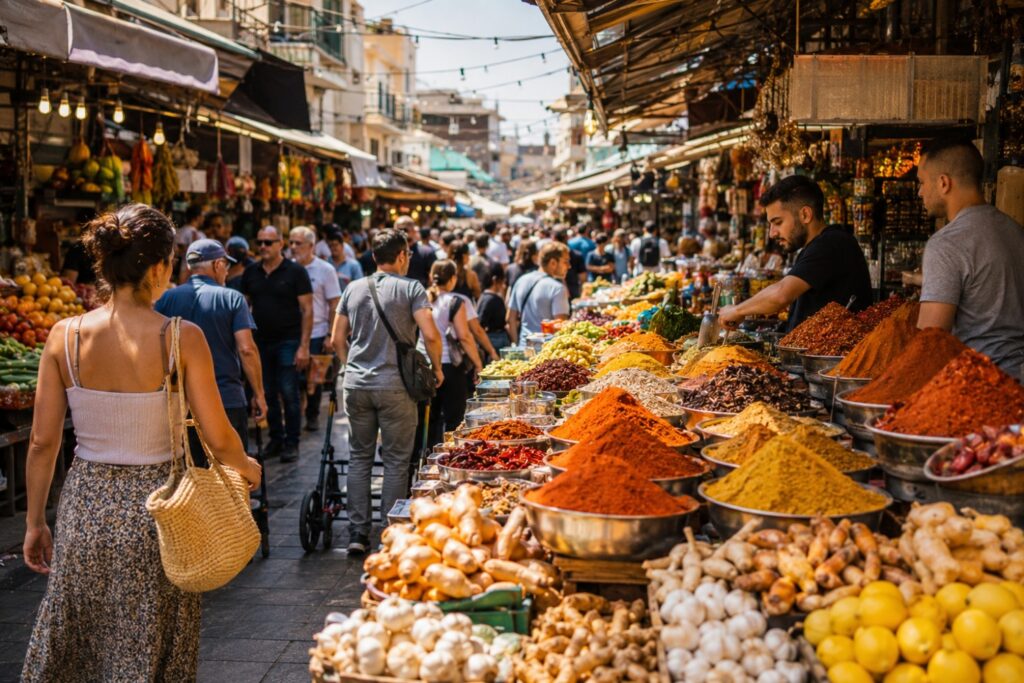
I skipped this one entirely on my last visit, and that was a mistake worth correcting. If Shuk HaNamal is the polished cousin, Carmel Market, known locally as Shuk HaCarmel, is the original, loud, sprawling, and packed shoulder to shoulder by midday. This is Tel Aviv’s largest and oldest market, running since 1920, and it is the closest thing this city has to sensory overload in the best way.
Spices piled in bright mounds, vendors calling out prices, fresh fish laid out on ice, and side streets branching off into hole-in-the-wall eateries that never make it onto a map. Move fast, move often, and do not be afraid to ask a vendor what something is. That is half the fun.
- Address: HaCarmel Street, entrance near Allenby Street 59, Tel Aviv
- Hours: Sunday through Thursday roughly 8:00am until sundown, Friday 8:00am to early afternoon (closes ahead of Shabbat, earlier in winter), closed Saturday
- Price range: $ to $$
Friday morning is the move if you want the full-volume version, with the whole neighborhood shopping ahead of Shabbat. If you want a calmer walk-through, hit it on a weekday morning instead.
New Stop: Miznon, Pita Redefined
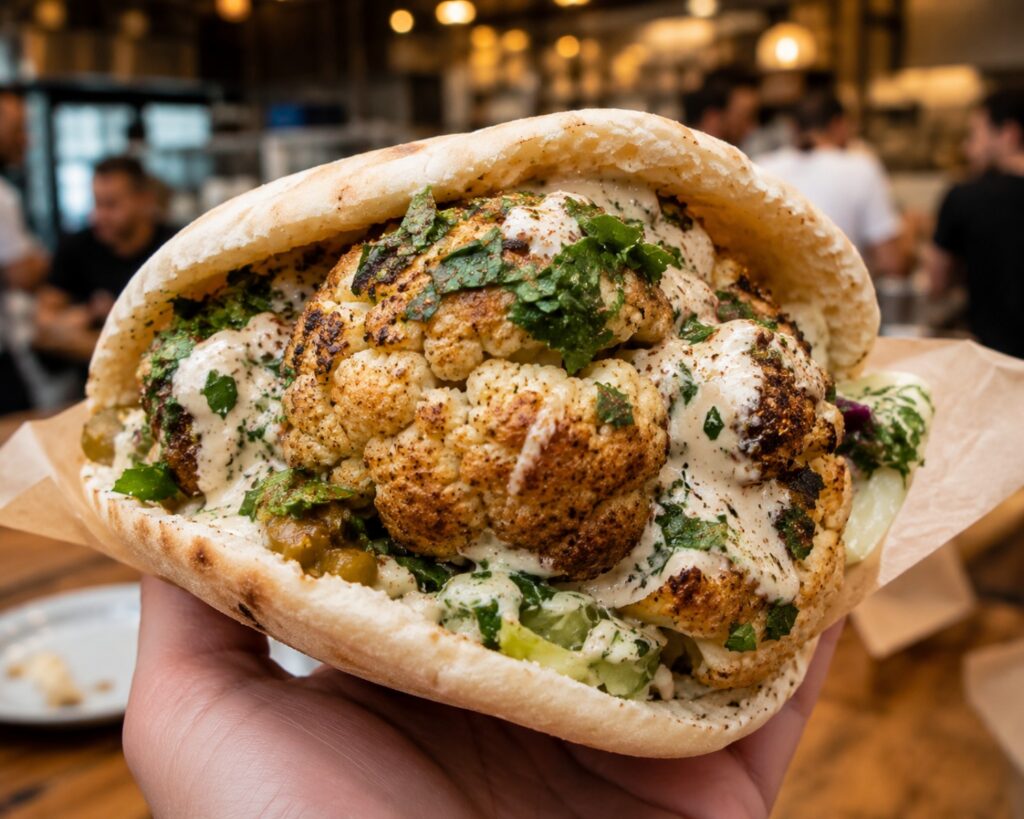
This one earns its spot because it changed how I think about what a pita can hold. Chef Eyal Shani’s Miznon takes the pita and turns it into a serving vessel for everything from whole roasted cauliflower to minute steak to slow-cooked ratatouille. It sounds like a gimmick until you eat one, and then it is just the standard you compare everything else to.
The Ibn Gabirol location is the original and still the busiest. Order at the counter, listen for your name shouted across the room, and grab a stool. It is loud, it is fast, and it is worth the noise.
- Address: Shlomo Ibn Gabirol Street 23, Tel Aviv
- Hours: Sunday through Wednesday noon to 11:30pm, Thursday noon to midnight, Friday noon to 4:30pm, Saturday noon to 11:30pm
- Price range: $$
- Link: Miznon official site
Order the whole roasted cauliflower pita if you order nothing else. It should not work as well as it does, and yet it is one of the best things I ate in this entire city.
An Update on Beachside Breakfast in Jaffa
Last time I wrote about this city, I sent readers to Cassis, the beachside restaurant on Givat Aliyah Beach in Jaffa, for their stacked Israeli breakfast on homemade flatbread. As of this update, Cassis is temporarily closed while it works toward reopening, so consider this your heads up before you plan a special trip there. Keep an eye on their site if you want to check current status before you go.
- Cassis link: Cassis official site (status updates)
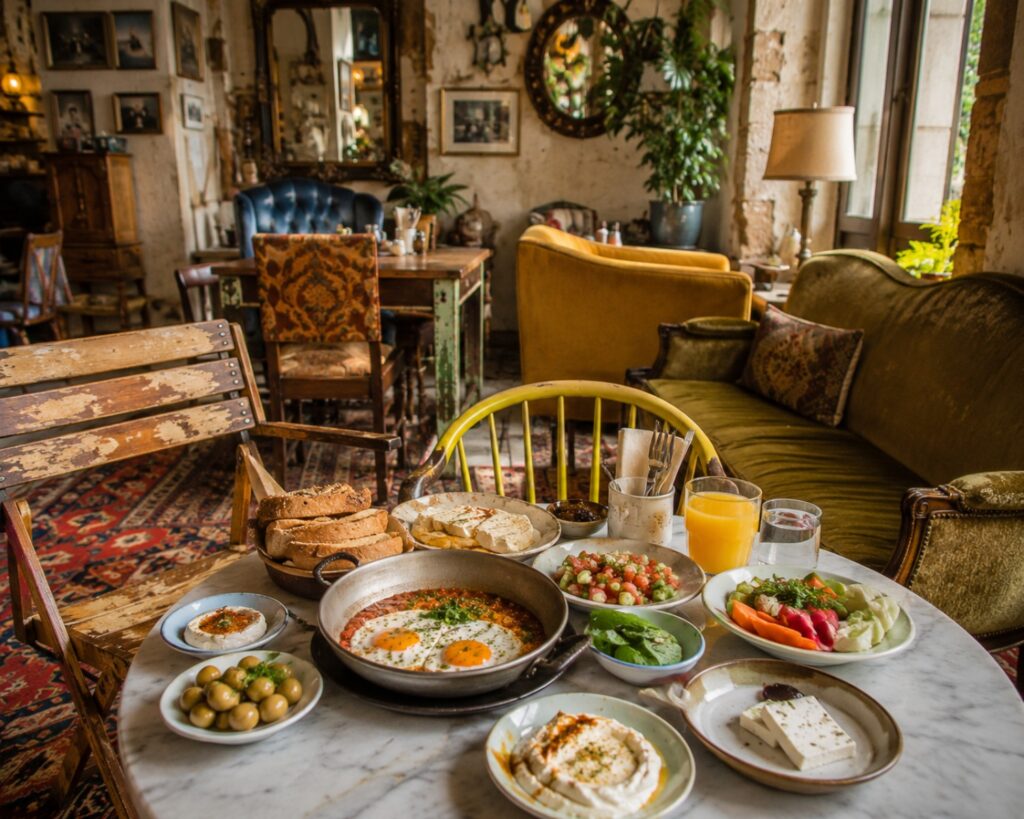
In the meantime, I found the replacement, and honestly it might edge out the original. Café Puaa sits right in the heart of Jaffa’s flea market, inside a building furnished entirely with vintage pieces pulled from the surrounding stalls, and yes, the furniture is for sale while you sit on it. Breakfast runs all day here, the vibe is somewhere between your grandmother’s living room and a design magazine shoot, and it does not require a beachfront view to earn the visit. The flea market energy outside the door does the job instead.
- Address: Rabbi Yohanan Street 8, Jaffa, Tel Aviv
- Hours: Sunday through Wednesday 9:00am to 12:30am, Thursday and Friday 9:00am to 1:00am, Saturday 10:00am to 12:30am
- Price range: $$
- Link: Café Puaa overview
Order the all-day Israeli breakfast if you want the classic, or go for the curried pumpkin dumplings if you are feeling adventurous. Either way, walk it off afterward through the flea market stalls right outside. That is the whole rhythm of this city: eat, walk, eat again.
The Eat-About Route, If You Want a Plan
I do not usually plan meals in advance, but if someone forced me to hand over a route for a single day of Israeli street food in Tel Aviv, here is what it would look like:
- Morning: Iced coffee from a boulevard stand, then breakfast at Café Puaa in Jaffa
- Late morning: Walk north along the beach promenade toward the city center
- Midday: Falafel at HaKosem, extra fries, no regrets
- Afternoon: Carmel Market for spices, produce and people watching, hummus wherever the line is longest
- Evening: Miznon for the cauliflower pita, fresh juice on the walk back
- Dessert: Malabi from whichever stall looks busiest
That is roughly six hours of walking and eating, which sounds excessive until you are actually doing it and realize you could keep going. Tel Aviv has that effect. The food does not let up, and neither should you.
Final Word
Israeli street food does not politely wait for you to be ready. It moves at the speed of the city itself: fast, direct, unbothered by whatever pace you thought you were going to keep. Show up hungry, walk more than feels reasonable, and let the shuks, stands and corners of Tel Aviv do the rest. This is not a cuisine you sample carefully. It is one you chase.